(….) is the New Crossfit

The first well documented trend was when a caveman used some tallow from a buffalo that he had hunted down, smashed the buffalo’s teeth equidistant into the thin line of tallow and hung the result on his cave wall. It was a primitive version of hippie lights, and as soon as the other nearby cavemen saw it, the trend rocketed across the globe.

Since then, trends have developed in much the same way, apart from traveling much faster across the globe with our now superior technology. Here’s a quick list of bygone trends to bring a single tear of nostalgia to your eye that you’ll quickly wipe away once your wife eyes you suspiciously as you hover over the phrase “lawn darts”:

Clothing: loin cloths, bell bottom khakis, mood rings, hot pants, platform shoes

Exercise trends: Yoga, Crossfit, HIIT, LISS, step aerobics, sit and be fit, 6 second abs

Just for Fun: Frisbee, Pet Rocks, Stretch Armstrong

Dances: The Freddie, The Electric Slide, The cha cha slide, The Chicken Dance


The categories and lists are endless.


Now before you go digging through your pile of old Allen dolls to find your Simon game, listen here, sonny Jim! There’s a larger point to this post.

The coronavirus has destroyed many things, and many of those deserve the amount of attention they are getting. But can we spare a few minutes to consider the collapse of the trend?

All that is being covered in the news is the coronavirus, and rightfully so, but how are we supposed to know what is trendy anymore without being told and shown a million people wearing or playing with it?

I’ve barely heard anyone tell me that they are a vegan or a crossfitter the last few months.

I haven’t seen anyone do The Hustle in longer than I can remember.

The number of robberies I’ve seen stopped by a chain wallet is rapidly approaching zero.

We’re in desperate need of a new trend.

And I am here to provide it:

The sardine challenge.

The routine is simple, you film yourself eating a can of sardines with whatever condiments or sides you like. Then you scream: “I am both the ideal man (or whatever gender is appropriate) and the ideal sardine”!

That’s it. Plain. Simple. Easy.

All that’s left to do after that is to talk about it and pass around the video as much as you can. Let’s reclaim our trends from COVID 19!


Update 11:15 am:

Already this trend is exploding. People all around the world are doing the sardine challenge. I knew you all wouldn’t let me down.

Communication in the Time of Corona

At the time of this writing (I assume everything I write is read by a future species or alien conquistador many years from now, after slumping down on a rock after completing a moderately difficult hike which has made him entirely too exhausted. Prompting him to dramatically wipe his brow, throwing himself off balance and revealing that the rock upon which he rested was just a front for some of my old writings, preserved in some sort of e-papyrus underneath the lid of the faux rock. So I like to give context in terms of time period) there is a global pandemic afoot.

This isn’t a piece about the coronavirus! (I want this to be clear to the future people, as I’m sure they have found copious evidence of writings and documents concerning the 2020 pandemic. I need them to read the full work and not check out early on faulty pretenses).

In this time, however, there is a constant debate about the use of masks to prevent the spread of the virus.

There has been a recent study to show that if two people are in contact, let’s call them person A and person B, and person A has the virus whilst person B does not, if person A wears a mask and person B does not, it reduces the risk of transmission by a certain percent. If person A does not wear a mask, but person B does, it reduces the risk of transmission by a smaller percentage than the first scenario, but is still effective. If both parties wear masks, the transmission rate is lower than in both of the first two scenarios. To sum up:


  1. Person A (has virus, wears mask)+ Person B (no virus, no mask)=effective
  2. Person A (has virus, no mask)+ Person B (no virus, wears mask)=effective
  3. Person A (has virus, wears mask)+ Person B (no virus, wears mask=very effective
  4. Person A (has virus, no mask)+ Person B (no virus, no mask)=ineffective


But if you want a discussion on coronavirus or mask use you’ve come to the wrong blog post today. Do a quick google search (or yell into the time vault, future peeps) if you want more info on that topic.

We are going to use the above principle in today’s post to talk again about communication. Specifically, unpleasant communication.

Here is my contention: it is all of our responsibility to communicate well, both in listening and speaking. If everyone is listening well and making good points, our conversations will be infinitely better. However, there are some situations where people can’t communicate well. Let’s say we have two people: Ignatius and Caroline Rebar. Ignatius HATES vegan tacos and Caroline Rebar LOVES vegan tacos.

Now if Ignatius and Caroline Rebar both listen to each other well, allow each other to make their points about why they feel the way they do about vegan tacos, in all likelihood they will find some common ground and probably be laughing and in good spirits after the conversation.

If, however, Ignatius is having a horrible day and just wants to take out his frustration by not using good communication skills, and Caroline Rebar continues to use good communication skills, they may be able to come to, a slightly less effective, but admittedly good conclusion to their conversation by the end.

The reverse could be true if Caroline Rebar is having a horrible day.

But if neither of them uses good communication skills, the outcome could be horrendous. They could resort to physical violence, name calling, overall ineffective communication skills that may lead to bridges being burned and feelings hurt beyond repair. Leading to damaged communication lines and one or both of them doubling down on their position just to spite the other person, when a good conversation may have led them to concede some points to the other side.

To sum up:

  1. Ignatius (good mood, good communication)+ Caroline Rebar (good mood, good communication)= Good outcome
  2. Ignatius (bad mood, bad communication)+ Caroline Rebar (good mood, good communication)= Ok outcome
  3. Reverse of parties from scenario 2= Ok outcome
  4. Ignatius (bad mood, bad communication)+ Caroline Rebar (bad mood, bad communication)=DANGER


Now let’s tie this all together with a nice, neat bow, shall we gang?

Some people can’t wear masks for various reasons. Some people can’t communicate well for various reasons. But many people can do both of those things and choose not to do so. If you believe that it is our duty to wear masks to protect ourselves and each other, then you may need to use your communication skills and your mask wearing in tandem to make your point. If you have strong opinions on any issue, make sure you are using good communication skills to achieve the best outcome possible, regardless of what the other party does in reply. And just because the person you’re trying to talk to is a bad communicator, that doesn’t mean you have to be.

How to Save the World

It is my contention that better listening skills can save the world.

Do you think you are a good listener?

In my brief experience on this earth, I’ve found that many people do not really listen when having a conversation. You hear, certainly. The vibrations produced from the other half of the conversation hit your eardrums and signal the auditory system to kick into gear. This allows you to know when your partner in conversation is speaking or not speaking. 1 or 0. Binary code. At this point you may as well be a computer.

But hearing is vastly different than listening. And you are so much more than a computer.

Think about this honestly: when is the last time when you had a conversation and you actively listened to the other person? This requires you to first hear the sounds coming at you, we’ve established that we’re all experts at this. You then take that auditory stimulus, in the form of words, and direct your brain to interpret what the words mean.

Additionally, from that sound wave your conversation partner has put forth, you detect tonal differences.  Now you can direct your brain to both understand the meaning of the words, and interpret the tone associated with that meaning.

Next, we can even move away from the ears and bring some other systems into play. Using our eyes (if we’re talking in person), we can absorb the visual stimulus and our brain can interpret further. i.e. is our counterpart slumped over, nervously shaking, rubbing his or her face, bleary eyed, smiling?

Now comes the hardest part. Silence. You need to actually be silent for just a few seconds. You need to allow your brain time to process all of the information it now has available: tone, meaning, and visual stimuli such as body language to name a few. Just a couple of seconds while you actively listen to what the person has said and interpret it.

Following that is perhaps an even more difficult aspect, getting clarification. You have heard, you have seen, you have interpreted and you have taken time to process it all. Now the information is clear in your mind. But is it correct? Instead of assuming it is, you could restate what you have interpreted from the information presented and/or ask if you have heard the other person correctly.

When was the last time you went through those steps in a conversation? Have you ever?

Enter your favorite part, your turn to talk! This is usually where you are ready to offer advice: a referral, an action plan, something that has worked for you in a similar situation. You may have been waiting from the second the person opened his or her mouth to offer a solution. However, in most scenarios, it is much less effective to offer advice or try to fix the problem rather than allowing the person to come to a conclusion on their own. This brings us to motivational interviewing and the socratic method.

An oversimplification, perhaps, but lumping the socratic method with motivational interviewing and starting with a conversation where a person comes to you with a problem:

You listen to that problem. You interpret all of the data you have available using your senses and your brain. You ask clarification questions, if necessary. You don’t interrupt. Then comes a very difficult skill that is rarely mastered: guiding this person to a resolution of their problem. This is accomplished mostly by asking questions of the person but not in an interrogatory manner. However, I don’t think you have to be a trained counselor to get better at this skill. In fact, if you ask certain questions and guide the conversation gently, the person may discover on their own that a counseling session may be effective for them.

Another general scenario is one where someone is talking to you, but they don’t have a problem they wish to discuss. Maybe they are happy or excited about something. Believe it or not, this can be difficult to handle as well. You interpret that they are not sad or upset and you immediately dismiss that feeling as something that doesn’t need to be addressed. Then they will go from a big high, where they were excited enough to come to you and tell you about an accomplishment, to a deep low, where you have diminished their feelings to a “congratulations” and a quick transition to whatever topic was on your mind before. But the same principles as before apply:

A person comes to you and is happy about a recent accomplishment. You interpret all the data you have available using your senses and your brain. You ask clarification questions, if necessary. You don’t interrupt. You establish that this person genuinely seems happy. Now you ask them about their accomplishment, you celebrate with them, you let them have time to bask in a victory.

On the flip side: are there times where you may need to quickly respond to someone without going through this scenario? Of course. If you’re guiding someone who took over for a sick pilot and is flying a plane through a storm and you have ten seconds to tell them which buttons to press and how to direct the plane, you can’t use the socratic method. There are certainly other examples as well.

But the point remains, if you listen to the person, ask questions and think about what they’re telling you, both of you will have a deeper understanding of the issue at hand.

Although this may seem like a time-intensive process, the more you do it, the better you’ll get at it. The better you are, the more efficient you’ll become. The more efficient you are, the more people you can truly listen to using this same method. The more people you listen to, the more people feel understood and less alone. The more people who feel understood and less alone, the more happiness will be present in the world.

And thus, you’ve done your part to save the world.

The Candid Canner Returns

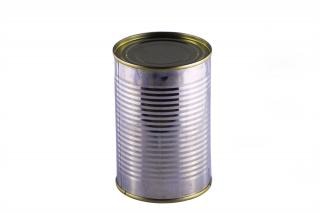
Back again with another edition of Candid Canner! For those of you too young to remember, your favorite canner gives feedback on reader submissions. You send in a picture of a canned good, and the candid canner gives you honest, helpful feedback. Let’s dive in gang!


Submission 1:

Image result for can

It’s a wonderful can, certainly. But for my money I prefer a can in nature, out in the elements. This can has little to no personality. There’s no dents showing how well loved the can is, no label, even no background. Where would one even find a can like this? Are you a can manufacturer taking pictures fresh off the assembly line?

4/10


Submission 2:

Image result for toilet

Wow! Well I suppose a toilet IS a can to some. This made me chuckle. Kudos to you, Crystal. But in terms of a can, I certainly cannot give this a high rating. The contents of this can are not something I want to think about.

2/10


Submission 3:

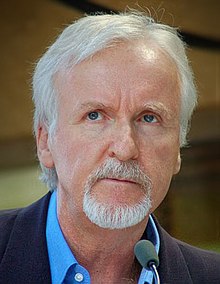
Image result for James cameron

Ok now. This is James Cameron. His last name is….somewhat close to can I suppose. But how am I supposed to compare him to other can submissions? He can store no goods, I don’t think he’s ever even made a can-themed movie!

0/10


This was not a banner week for can rating. But I know we’ll be back in force in the very near future. Thanks for your belief in me, and your contributions to my go fund me. I’m now 3/4 of the way to my goal of 10,000 dollars for surgery to turn both of my legs into large cans. We’ll get there!


Until next time,

Can Phillips

The Oxygen Mask

Recently I was on a plane ride (relatable!) and had a revelation. I was settling into my seat and getting ready to listen to my podcast that I had lined up on the history of mayonnaise, when, to my horror I realized that I had forgotten my headphones. After I had gone through the stages of grief and finally reached acceptance, I decided to listen to the flight attendants’ spiel on safety and what not. Because this was to be my only form of entertainment, I listened intently to their performance. Perhaps it was because I was so bored and wanted desperately to find meaning in their words, or because I truly had been inspired, but my revelation came as the oxygen mask  protocol was described.

They said that the oxygen masks will come down, and that we should apply our own if we are able and then help the people around us, if they are unable to do so on their own (paraphrasing, lay off me flight attendants!). In my desperation to connect this to something bigger than what it was, I realized the connection to real life.

Person one can never effectively help person two unless person one has taken care of his/her own needs first. Person one can not help person two if person one is in an iron lung from eating a strict diet only cool ranch Doritos and smoking a pack of menthols a day. Now the situation reverses, and person two, now needs to take care of person one, while never having received the help they needed to start with. (following? I’m not sure I am…)

Another example: person three can never effectively help person four if they don’t model behaviours (British spelling, don’t @ me) that will address person four’s needs. Person four needs help with their anxiety and person three tells them to meditate, exercise, and eat well (wonderful!) then proceeds to eat a peppered slim Jim casseroles in a 15 minute timespan while on a conference call, pausing the call occasionally to tell person four that he/she should eat more vegetables and go for a daily walk. (I think I followed that example a little better).

So remember this, if you want to help someone, you first need to help yourself, and there is no shame in that.

Dina

Geraldine Contreeba is a frequent contributor to our site. Her views are her own.


Don’t Trust Reviews

I recently saw the movie “Bohemian Rhapsody” and absolutely loved it. After seeing it, I went online to see what people were saying about it and found overwhelmingly low scores from professional and amateur reviewers alike. I was disturbed by this as I really want people to see this movie. But then I sat down and really thought about it, and discovered that these reviewers had a point. So here are some ways in which I think the movie could be improved to please these critics:

  1. Freddy Mercury shoots lasers out of his mouth whenever he is unhappy, vaporizing his enemies. He also somehow becomes an expert at kung fu and roundhouse kicks Mick Jagger off the stage when they are performing an electronic dance number and Mick misses his cue. The reviewers who said the story was too boring would have been satisfied with this change I think.
  2. The movie was said to be inaccurate in terms of the dark parts of Queen’s history. An after credit short film showing gratuitous sex and drug use while “Another One Bites The Dust” is played on repeat may be just what the doctor ordered for these critics.
  3. This idea is a bit of an immersive experience for those who said that they didn’t like Queen’s music. While some may offer that these people probably shouldn’t expect to like a movie about a band they despise, I see exactly where they are coming from and I have a solution: The theaters provide headphones that play your choice of Little Richard’s Greatest Hits or Michael Buble’s Christmas album during the scenes where Queen’s music is playing. Would that make you give it a few more stars on IMDB @danmagickingdomrocks45 ?
  4. Another review stating that the movie should have “gone deeper into the individual character’s pasts and relationships” (4/10 review). Simple: scrap this movie and make 45 more movies, each 3 hours long, giving an incredibly detailed account of every person depicted in the film. When every other audience member’s eyes have bled out and brains have rotted, I hope your review can improve to at least a 6/10 with this modification @alyson4ever62124863

I think any or all of these changes are certainly things that the director should have considered. It’s not fair that they made a fun, enjoyable movie with scenes that the audience can’t help but tap their feet to and sing along with. WE WANT ACTION, WE WANT THOROUGH HISTORY OF EVERYONE WHO EVER KNEW FREDDY.

Now the onus is on you, Hollywood. Remake the movie with the above changes and I think you’re going to see 10/10 across the board from our reviewers.

-Kim

Kimberly Fletley is a reporter for our company, however her views are her own.


Election Day

Common Election Day nonsense and the response from one of our frequent contributors, Tim Blandsword:

“My vote doesn’t matter I live in red/blue state and I’m going to vote in the opposite direction”

  • That is probably accurate. But just because something is likely going to turn out one way does that mean that you shouldn’t try to turn it around? A 16 seed just beat the number one overall seed in the NCAA basketball tournament last year. Now every number one seed team knows that they should never be unprepared, and every 16 seed team knows they can win. That may be a classic, silly, TB example, but it holds true. And TB can say it cause TB has a voice.

“I don’t know anything about the candidates.”

  • What are your thoughts on changing that in 15 minutes by reading about a few of them on their web sites? Ignorance is almost never an acceptable excuse anymore in the age of the internet. Classic Blandsword response.

“They make it so hard to vote in my state, I don’t want to bother with it.”

  • Yes that’s a pain in the old behind. Agreed. However, TB’s advice is to not take “no” for an answer. It is your right to make your voice heard through voting. So if you are passionate about your views and you want the people in office to represent those views, call whoever you need to every day, every hour, whatever it takes to make sure you are eligible to vote and don’t let them tell you “no”.

“I locked my keys in my car.”

  • Not entirely sure how this one got mixed in here. But if you need to break the window, a frozen bag of Brussel sprouts typically works quite well.

“I’m afraid I’ll get yelled at or harassed at the polls or that I won’t know how to do it, I’ve never voted before”

  • That is a scary thought and TB ain’t gonna tell you that won’t happen. But take a quick look back through history and think of people who were harassed as they were changing history. They kept their eyes on the prize and pushed through until they made their mark. Your vote is no less important than any famous speech, movement, protest that changed the world in the past. TB signing off.

Poignant as always Tim, Thank you.

Top Three Things to…

  • Swaddle
    • Babies
    • Smol animals
    • Burrito ingredients (to make a burrito)
  • Jump over
    • A rope
    • A body of water (be reasonable here. A babbling brook is a good place to start.)
    • The moon (if you are a literary cow)
  • Climb
    • Mountains
    • Corporate ladders
    • Manilla ropes
  • Drink
    • Non-poisonous liquids
    • A view from a high vantage point
    • To life
  • Wear to a ribbon cutting ceremony
    • A robe made of previously cut ribbons from past ceremonies
    • Paisley
    • Sensible shoes for running in case you cut the wrong ribbon

You’re welcome.

Calories In Vs. Calories Out Vs. Bad Advice

Greetings Gang,

Many of us have had weight problems at some point in our lives. It is hard to know where to turn when we want to make a lifestyle change, like losing weight. Food is  emotional, memory evoking, comforting, and many other things to many people. It can be very hard to give up or modify beloved foods.

Often times people will turn to the internet when beginning a weight loss journey. They can covertly search for whatever they want to find, and none of their friends or family will be the wiser. This shouldn’t be an issue. However, many online presences see an opportunity to capitalize on people’s vulnerability. They have started to give advice on weight loss that is either: dangerous, misinformed, or….accurate and helpful. But it is hard to know which is which.

As far as WEIGHT LOSS goes there is an undeniable truth: if you maintain a caloric deficit, you will lose weight, if you maintain a caloric surplus, you will gain weight. Translated: if you eat fewer calories than you expend during the day for all of your movement and general body processes, your body will tap into calorie-filled structures to provide energy and you will begin to lose weight. And Vice Versa.

*CHALLENGE: if anyone denies this, or thinks that they have followed a diet (there must be evidence in the literature and/or the author’s book that people will lose weight) where this is not the case, please send me that diet and I will point out how this diet creates a caloric deficit. If I am wrong I will post a video of myself eating a smol pillow.

I caps lock “weight loss” because this does not mean “fat loss”. When you are in a caloric deficit, you will lose a percentage of fat, muscle, and bone. Every time.

The reason why “slow weight loss” is often touted by health professionals is because when you lose weight more slowly, you tend to lose a larger percentage of the unwanted fat rather than the necessary muscle and bone.

Weight loss is also not synonymous with “health”. If you are 5 or 10 pounds above your ideal body weight, you may still be very healthy. Your heart health, blood work, etc may be excellent even if you have a little extra weight packed on you. You may have good mental and emotional health too, with the foods you eat keeping you in a slightly caloric surplus make you happy. IF YOU ARE HEALTHY AND HAPPY, DON’T LISTEN TO THE HATERS.

However, if you want to make a change for weight loss:

  1. Figure out why exactly you want to lose weight and set goals. (A goal of being able to play with grandkids, getting off of some medications, improving your mood are great goals whereas a goal of looking good in a bathing suit is less effective. Look for goal discussion in later posts.)
  2. See your doctor and let them know that you are going to start a new eating plan, they may need to adjust your medications as your blood pressure, etc can change with a changing diet. He/She can also help guide you to figure out what your daily calorie needs are and your ideal body weight.
  3. Keep a food diary (electronic or written) by writing down what you eat for a week.
  4. Find areas in your food diary where you can make substitutions for a lower calorie food. For example, sub out Oreos for fruit *NOTE: lower calorie is not synonymous with healthy. A healthier, and lower calorie option will often be fruits, veggies and whole grains* (Clear any new diet plan with your doctor)
  5. There are 3500 calories in a pound of fat, so substituting in a way to cause a 500 calorie deficit per day will lead to a pound of weight (mostly fat) loss per week.

Why is this advice not in any diet books? Two reasons: 1) if you follow this plan, it will work and you won’t have to buy more diet books and 2) It is probably the least interesting thing ever written. I almost fell asleep writing it.

Again, This is about weight loss, not health. Weight control is certainly a component of health but there are also many others. Never sacrifice your health for weight loss.

Sincerely,

Goat Adams

NOTE: This is all general knowledge and does not constitute medical advice. Always see your doctor before beginning any new diet plan.

Fall Weather

It be that time o’ year again. Winds: blowing, warmth ponchos: being worn, jeans: tucked into socks. CEOs are finally able to consider wearing their paisley robes without feeling shame at their billionaire soirees.

Fashion is difficult to gauge during this time. Who does one turn to if he or she isn’t sure if a fall evening calls for a ten gallon hat or a cutoff Ed Hardy T? I feel that I would be remiss if I didn’t, in my role as an incredibly influential and wide reaching blogger, offer some helpful tips on how to get through these fall months without losing respect of those around you.

Please, consider the following three rules (these should cover everything ala asmovian robot rules):

  1. If it’s below 60 degrees and above 40 degrees, long sleeves should at least be available. This can take the form of a sweatshirt, sweater, jacket, or zip off sleeves. The long sleeve item can be left in your car, etc, but should always be within eyesight.
  2. Hats should be considered for all indoor and outdoor events, unless this hat is of a size to interfere with rule 1.
  3. Sweating is to be encouraged and loudly applauded/pointed out when observed. If someone is following these iron-clad rules and got a little too warm, respect their effort at style and make sweating fashionable. If you’re the one sweating profusely, announce it! Wherever you are. It goes without saying that this should not interfere with rule 1 or rule 2.

Try it out and report back to me fam.

Love always,

Abraham Blingkon